

On September 15, Colvir Software Solutions held Colvir Islamic Brunch Live, an international online event on the practical aspects of developing Islamic banking. Experts from banks, financial markets, Islamic finance, risk management, compliance and technology discussed how to turn new regulatory opportunities into working banking products, and why developing a new contract or adding a product to the core banking system is not enough.
The program moved from legislation and the Islamic window model to banking system architecture, Sharia oversight, risk management, human capital and the development of the Islamic capital market. The practical focus was built into the concept of the event: to bring together, in one broadcast, specialists who are already shaping regulation, launching Islamic banking units, and running Sharia oversight, risk, processes and technology.
The speakers were Madina Tukulova, CEO of the Association of Islamic Finance and Business of Kazakhstan; Aibar Sovet, Head of Islamic Banking at Bank CenterCredit; Nastasya Solovey, Director of the Business Analysis Department at Colvir; Adilbek Ryskulov, Executive Member of the Islamic Finance Principles Council (IFPC) at Zaman Islamic Bank; Madina Bilalova, an expert in human capital and trust development; Timur Musin, Chief Risk & IT Officer and Management Board Member at Al Safi Bank; Kuandyk Urazbayev, Product Owner of Islamic Banking at Halyk Bank, certified Sharia advisor and auditor; and Daiana Nakupova, Managing Partner at HAQ Consulting and an expert in Islamic finance and capital markets.
How the Topic Moved from Promising to Practical
Just a few years ago, discussions of Islamic banking in Central Asia largely revolved around market potential. In 2026, the key question is no longer whether the region needs Islamic financial products, but how exactly to launch them.
This is especially visible in Kazakhstan. The new legislative framework allows a conventional bank to open an Islamic window within its existing legal entity, keeping its universal banking license and obtaining an additional license for Islamic banking and other operations. At the same time, the Islamic business must operate in a separate contour with segregated accounting, separate accounts and a system for monitoring compliance with Islamic finance principles.
The environment is also changing in Uzbekistan. The event covered the country's new regulatory momentum and the need to align the development of Islamic finance with international AAOIFI principles and financial reporting requirements. Staffing, technology and operational issues are largely the same for banks in Kazakhstan, Uzbekistan and other countries of the region: financial flows must be separated, processes and controls rebuilt, teams trained, and clients given an explanation of the fundamentally different economic logic of the products.
Another important factor is that Islamic finance is gradually moving beyond a purely religious offering. For banks, it is an opportunity to attract clients who previously avoided conventional instruments because of their beliefs, gain additional sources of funding, expand their product range and build cooperation with international Islamic financial institutions.
Against this backdrop, Colvir Islamic Brunch Live focused on a practical question: what must change inside a bank for an Islamic product to comply with Sharia principles not only at the contract level, but in every transaction, accounting entry and system action?
From License to Launch: The Regulatory Framework of the Islamic Window
The topic was presented by Madina Tukulova, CEO of the Association of Islamic Finance and Business of Kazakhstan.
The main change for the Kazakhstan market is a full-fledged mechanism for an Islamic window within a universal bank. Launching does not require a separate subsidiary bank: the business can operate through a dedicated division or a branch.

However, the simplicity of the legal form is offset by strict requirements for segregating operations. The Islamic window must maintain separate financial and management accounting, separate on- and off-balance-sheet accounts and separate correspondent accounts. It must also have its own system for managing specific risks, Sharia oversight, specialized compliance and internal audit.
The independence of Sharia governance is particularly important. In the model presented by Madina Tukulova, it has three levels: the Islamic Finance Principles Council (IFPC), a specialized compliance function and internal audit. If a review finds a transaction that did not comply with the established principles, the related non-permissible income must not remain in the financial result of the Islamic business.
One of the most telling facts of the presentation was the estimate of potential demand for Islamic deposits in Kazakhstan: around KZT 2.8 trillion. A significant part of this potential demand comes from people who have never used deposit products at all because of their religious beliefs.
But turning demand into a working market still requires infrastructure: Islamic liquidity management instruments, tax neutrality, consistent regulatory guidance and the development of a domestic pool of qualified specialists. These areas are also highlighted in the Association's roadmap.
An Islamic Window Is Not Just a New Product but a Bank's Decision to Change Itself
The bank's practical perspective was presented by Aibar Sovet, Head of Islamic Banking at Bank CenterCredit. His presentation covered the experience of building an Islamic window within a conventional bank.
One of his main conclusions was that the usual product launch logic barely works here. Normally, a bank starts with a hypothesis, launches an MVP, evaluates metrics and scales the result. An Islamic window begins much earlier, with the shareholders' decision that the bank itself is ready to change its processes and rules of work.

Another non-obvious challenge is the interaction between the conventional and Islamic contours. Using the bank's shared infrastructure is a must: it makes no sense to rebuild cash desks, processing, payment systems and other services from scratch. But the financial result, accounts and flows of the Islamic business must not be mixed with the conventional ones. If non-permissible income arises from the use of shared infrastructure, its purification must be built into the process, with the funds directed to charity.
However, Aibar Sovet named not technology but something else as the most difficult part of the project. For years, a bank develops certain commercial and operational habits: cross-selling, volume targets, uniform approaches to tariffs, universal scenarios for managers. In an Islamic window, some of these habits have to be reconsidered. A client who came for an Islamic product cannot automatically be offered any product from the conventional contour; the specifics of the new model must be explained by trained staff; and the window gets its own goals, budget and rules.
The Sharia board plays a separate role. If it is seen only as a body that stamps a finished document, the bank loses much of its value. Involving experts at an early stage makes it possible to work through deposit structure, liquidity, use of shared infrastructure, cashback, foreign exchange operations and other issues that would be costly to redesign later.
Some tasks cannot be solved within a single bank at all. For example, the market has yet to develop full-fledged instruments for managing tenge-denominated Islamic liquidity, and clients will need to be shown how an investment deposit differs, where neither the return nor the principal is guaranteed.
Two Financial Contours, One Technology Platform
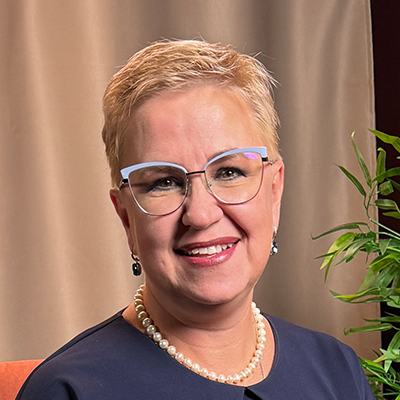
Nastasya Solovey, Director of the Business Analysis Department at Colvir, shifted the conversation to IT architecture. An Islamic window has a different contractual and economic logic, its own financial flows, separate accounting and restrictions that must be controlled throughout the entire deal lifecycle.
Colvir considers two fundamental models. For a fully Islamic bank, a separate instance of the system can be used, with the entire product and operational model built according to the relevant rules. For a conventional bank with an Islamic window, a different design is more practical: an independent Islamic financial contour is created within the existing core banking system.
Colvir's key architectural principle is “separate what must be separated, and reuse what can remain shared.” Products, contracts, accounts, transactions and users of the two contours are separated, while integrations, client data and part of the shared infrastructure can stay on a single technology platform.
So that this separation does not depend on manual actions by employees, the Islamic window gets its own digital perimeter in four dimensions at once: organizational, product, accounting and user. There is a separate division in the organizational structure, products and contracts carry a system-level Islamic attribute, and accounts, accounting models, roles and access rights are separate. The system itself determines whether each transaction belongs to the Islamic contour.
The next level is the so-called Islamic product factory. Instead of a set of one-off customizations, Colvir is designing a mechanism to support a whole family of products with different contractual scenarios and rules for accounting, funding, control and reporting.
This is particularly evident in the deal lifecycle. For example, when financing the purchase of an asset, the system must execute operations strictly in sequence and enforce that order so as not to violate Sharia principles. And if a penalty arises, for example for a client's late installment payment, it does not become regular bank income: the accounting model must automatically route it to a dedicated Charity Account.
The separation of contours must run from the Islamic product through the contract and the deal accounts all the way to the General Ledger.
As a result, the bank gets not a second IT system next to the first, but two financial contours on a shared technology platform, with the ability to view the Islamic business, the conventional business and the bank's consolidated reporting separately.
The Sharia Model Must Work Inside Every Transaction, Not on Paper
Adilbek Ryskulov, Executive Member of the Islamic Finance Principles Council at Zaman Islamic Bank, continued the technology theme from the standpoint of an operating Islamic bank and Sharia oversight.
According to him, work on a product must start long before automation. First, the bank must describe its basic model: define the contract, the subject of the deal, the sequence of operations, the stages of acquiring and transferring the asset, the allocation of risks, and the procedure for settlements and accounting, and provide in advance for non-standard scenarios such as early repayment, delinquency and restructuring. The result is a single “product passport” used by business, legal, accounting, operations and IT. It is essential that Sharia expertise is involved from the very beginning, rather than joining after the product has already been designed.
The speaker gave an example of the close link between Sharia and automation. If, under the approved structure, the bank must first obtain title to the asset, the system must not allow moving to the next operation until ownership is confirmed. Simply uploading a document is not enough: it must be clear who is responsible for verifying it, the result must be recorded, and the operation must be linked to documents, approvals and accounting events. Finally, there must be a full audit trail that makes it possible to reconstruct later who performed which actions and when, on the basis of which documents, and what data was changed.
Adilbek Ryskulov also identified several typical mistakes: changing the name and contract documentation while keeping ordinary lending logic; involving Sharia oversight too late; discrepancies between documents and employees' actual actions; and a lack of system blocks where the deal sequence must not be violated. Before launch, the product must be tested end to end, including attempts to perform a prohibited action. If the model requires a stop, the system must actually stop the operation.

Trust as an Operational Asset and a Financial Metric
Madina Bilalova, Founder and Chair of the HR Business Partners Association (HRBPA) and the BUSINESS HOLISTIC Alliance, offered a distinct expert perspective at Colvir Islamic Brunch Live. She looked at the launch of an Islamic window through the lens of HR architecture, corporate culture transformation and the ESG capital of trust.
“IT infrastructure creates opportunities, but trust is built by people. In ethical banking, reputation is not marketing but a tangible, measurable operational asset,” Madina Bilalova said.
The expert noted that in partnership-based finance, a client chooses not just a contract but the degree of operational integrity of the institution itself. Growing trust stops being an abstract idea and translates directly into key business metrics: lower customer acquisition cost (CAC) and protection against the risk of fund outflows (Displaced Commercial Risk).
According to Madina Bilalova, the success of an Islamic window launch depends on overcoming four barriers: staffing, reputation, technology and risk management. The deciding factor is rebuilding employees' DNA and KPIs, moving from transactional selling to expert consulting, where the incentive system rewards compliance, deal transparency and the client's long-term LTV.
The BUSINESS HOLISTIC Alliance proposes assessing “trust capital” through applied metrics: the HR Readiness Index (the team's readiness to convey the bank's values), Ethical NPS (a client trust index) and an audit of the risk function's readiness to handle the new nature of project risks.
In an Islamic Product, Risk Begins with the Structure of the Deal
The risk manager's view was presented by Timur Musin, Chief Risk & IT Officer and Management Board Member at Al Safi Bank.
The speaker described the fundamental difference between a conventional and an Islamic product. In classic lending, analysis largely centers on the client, their ability to pay and the source of funds. In the Islamic model, this is joined by the asset, the sequence of transfer of rights, the contractual structure and compliance with Sharia principles. As a result, a single error can be an operational, legal, reputational and Sharia risk at the same time.
A separate part of the presentation was devoted to AML/CFT. An Islamic transaction often involves more parties than a classic lending operation: the client, supplier, agent, buyer, asset owner and other participants. Customer Due Diligence therefore should not stop at the account holder. For complex structures, it is necessary to understand the entire chain of client, asset, counterparty and cash flow.
The same applies to sanctions control: screening does not end at onboarding. If the supplier, asset, geography or payment chain changes, the check must be repeated.
Finally, a product launch should itself be a managed process: concept note, Sharia & Legal review, Risk & Financial Crime assessment, IT and operations readiness check, a pilot on a limited sample and only then the final release. After launch, three lines of defense operate: business and operations, risk/compliance/Sharia, and independent internal audit.
Sharia Compliance: The Economic Substance of the Deal Is What Matters
Another banking perspective was presented by Kuandyk Urazbayev, Product Owner of Islamic Banking at Halyk Bank and a certified Sharia advisor and auditor.
He proposed viewing Sharia compliance much more broadly than a formal review of the contract. It is a system that combines religious and ethical principles, legal correctness, economic logic, financial sustainability and client trust. Its foundation is the prohibition of riba, excessive gharar and maysir, the exclusion of prohibited activities, the link between the deal and the real economy, and fair risk sharing.
Islamic banking operates in two regulatory layers at once. The Sharia layer includes Sharia principles, Sharia board rulings and international standards. The state layer covers civil, banking, tax and corporate law, AML/CFT and consumer protection requirements. A product becomes workable in practice only when both systems are observed at the same time.
Sharia compliance accompanies the entire lifecycle: product development, preliminary approval, actual execution and subsequent Sharia review or audit. For asset-based products, what matters is not only the contract but also the actual order of acquisition, ownership, delivery and settlement.
The speaker gave a telling example: simply removing the word “penalty” from a contract or replacing the word “interest” does not make an ordinary lending structure compliant with Sharia principles. Hence the main recommendations: a unified Sharia compliance policy, independent oversight, standardized procedures, staff training, regular audits and a transparent explanation to the client of their rights, obligations and risks.
The Next Stage for the Segment in Kazakhstan: Islamic Capital Market
The final presentation, by Daiana Nakupova, an expert in Islamic finance and capital markets and Managing Partner at HAQ Consulting, took the discussion beyond the banking product to the development of the capital market and sukuk.
For Kazakhstan, this market can potentially address several tasks at once: it creates an additional channel for long-term, risk-sharing capital to finance infrastructure and real assets, and opens access to the capital of international investors with Sharia mandates. The presentation noted that, according to the ICD-LSEG Islamic Finance Development Report 2024, Kazakhstan ranks 19th in the world in Islamic finance development and leads Central Asia on this indicator.

However, a full-fledged market is held back by specific legal constraints. These include an insufficiently clear list of sukuk types, features of the national property rights construct, the lack of reliable protection against an issuer later attempting to challenge the Sharia compliance of an issue, and a tax burden that can make sukuk more expensive than a conventional loan.
The proposed changes are meant to form a clearer model: enshrine sukuk types in legislation, protect the assets of a specific issue, limit the issuer's ability to challenge its own obligations after approval by the Islamic finance principles council, and bring the tax burden on sukuk closer to that of comparable conventional financing. The draft capital markets law, which includes a chapter on Islamic securities, has been published for public discussion.
The market is expected to develop in stages: first the legal and tax framework and company-level councils, then an advisory level at the regulator and the activation of sovereign and corporate instruments, further expansion of product infrastructure and, finally, cross-border placements.
Kazakhstan already has the infrastructure for this: two exchange platforms, KASE and AIX, which are developing in a coordinated way, with the choice of platform left to the issuer.
A Bank's Journey to Its Own Solution Architecture
The common thread running through the eight presentations showed that Islamic banking in Central Asia is entering a stage where market interest alone is no longer enough. Legislation is gradually opening opportunities for new players and models, but an actual launch requires simultaneous work on products, regulation, Sharia governance, accounting, risks, IT, staff and communication with clients.
For Colvir, too, the topic has gone far beyond market research. Colvir Islamic Brunch Live became the company's second own industry event on Islamic banking in 2026, and between the public discussions, practical work on the architecture of the future solution has been under way inside the company.
The approach presented at the event already defines the basic principles of implementation: a separate Islamic financial contour within the existing core banking system, four levels of system separation, an Islamic product factory, control of the deal across its entire lifecycle, accounting down to the General Ledger, access rights management and reporting on a single technology platform.
The company aims to turn the complexity of Islamic banking into “clear architecture and readiness for implementation.” Colvir has already formed its own architectural position and worked out how Islamic banking requirements should be implemented at the level of products, processes, accounting and system constraints. This allows the company not only to observe the formation of the market but also to work with banks to move from the concept of an Islamic window to specific products and working processes.
Continuing the Dialogue
Colvir Islamic Brunch Live became the basis for further work on banks' practical tasks. As a next step, Colvir plans to develop formats in which the conversation about Islamic banking will be built around specific cases, architectural solutions and the questions banks face when preparing new products.
One such format is closed case reviews. Banks will be able to bring their own task for discussion, for example launching an Islamic window, adapting existing IT architecture, building a product contour or implementing Sharia requirements in processes and accounting. Colvir specialists, together with invited experts, will analyze such situations in detail in closed sessions.
For tasks that require individual discussion, the Ask the Expert format has been prepared: short consultations with subject-matter specialists. Depending on the question, experts in Sharia compliance, IT architecture, and financial and product models will be able to join the conversation. This format will let banks check their own approach, identify problem areas and determine which directions need further work.
You can apply to take part in any of the new formats via the link.
Thus, Colvir's work in Islamic banking continues to move from industry discussion to joint development of specific solutions. For banks that are already considering launching an Islamic business or are at the stage of shaping its architecture, the company is open to inquiries, consultations and further expert dialogue.