

Introducing AI tools into a company is easy. All it takes is purchasing a corporate subscription to an AI platform. As many as 99% of organizations have already taken this first step towards an AI-powered future. Colvir has a different ambition: to join the small percentage of companies taking the next step — teaching employees not merely to ask AI questions, but to delegate parts of their work to it, together with the necessary context, rules, access permissions, quality criteria, and accountability for the results.
This is exactly the kind of experiment Colvir has been conducting internally since 2025. The company is now ready to share its initial results.
What began as a pilot AI bootcamp and demo day has gradually evolved into a structured program. According to Mikhail Larkin, Corporate AI Consultant and program instructor, approximately 110 employees have completed the training across four cohorts, while the internal backlog has grown to include 105 automation hypotheses. Some projects remain training experiments, others are being validated through real-world tasks, and the most promising solutions are moving towards preparation for production deployment.
However, the program's most significant achievement is not the number of agents created.
It is the shift in how employees approach their work. Instead of focusing on how to perform every operation themselves, specialists are increasingly thinking about how to design the process, define AI's role, and reserve human involvement for tasks that genuinely require human judgment.
First, AI Stopped Being Just Another Browser Tab
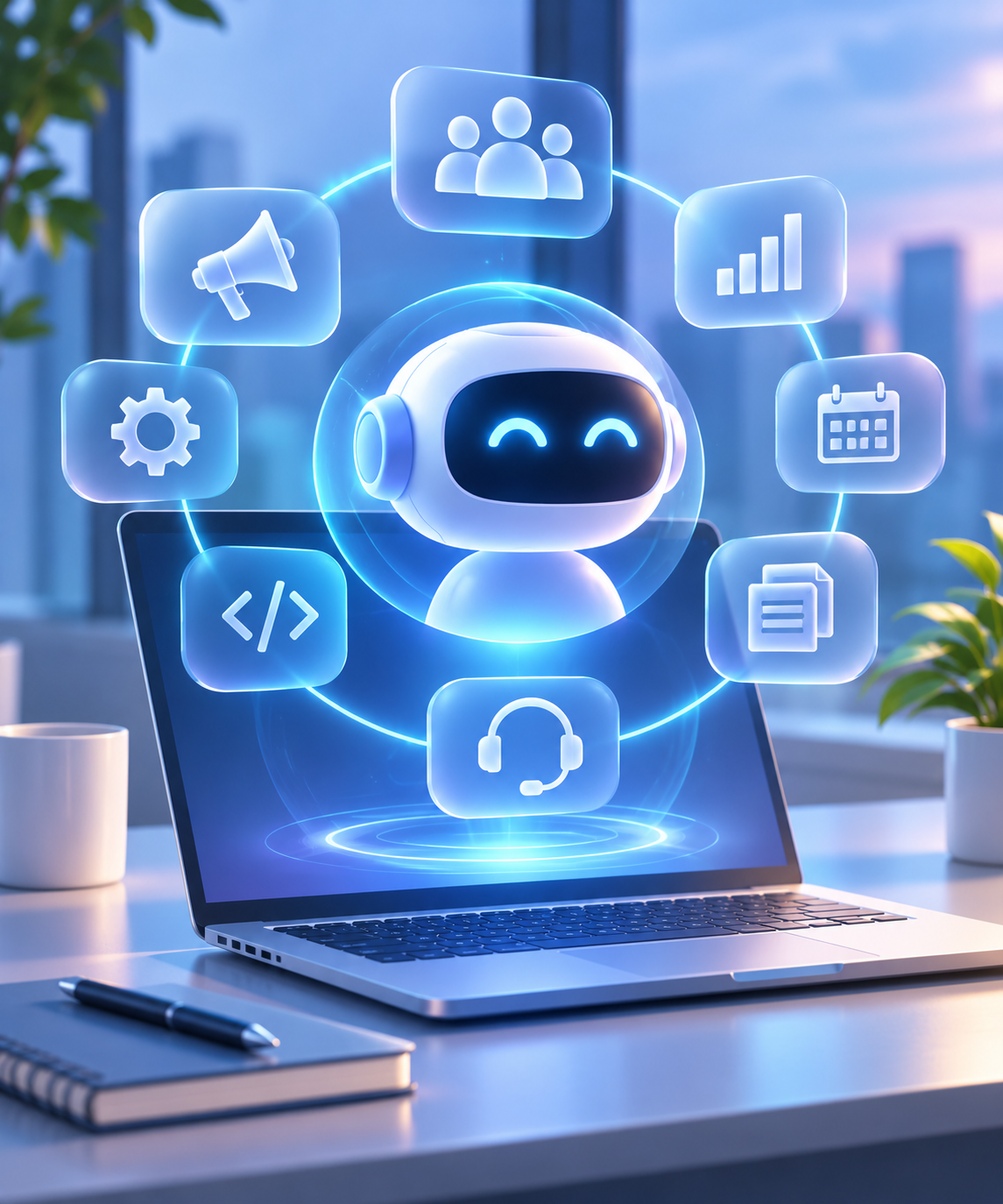

Colvir's corporate AI program was never intended to be a general introduction to neural networks. Over two and a half months, participants in the technical bootcamp progress from the fundamentals of prompt engineering — the ability to formulate tasks effectively for AI — and organizing working context to connecting data sources, building AI agents, developing, testing, and maintaining solutions. Here, an AI agent is more than a chatbot: it is an assistant capable of independently carrying out sequences of actions using authorized tools and predefined rules.
A separate training track was conducted for managers. It involved less software development and focused more on strategic questions: how to build a personal AI-powered working environment around documents, calendars, reporting, and tasks; which processes are worth automating; how to evaluate a hypothesis; and where an experiment ends and a corporate IT project begins.
The curriculum evolves as quickly as the technology itself. Material taught to the first cohorts had to be revised just a few months later.
For example, no-code platforms — services that allow users to build automations from ready-made components without writing code — have gradually been phased out of the course. Tasks that previously required complex workflows can now sometimes be solved through vibe coding: an employee describes the desired outcome in natural language, while AI helps create and refine the software.
Participants also learn professional development tools, integration through the Model Context Protocol (MCP), which enables AI to connect to external tools and data sources, and spec-driven development, where software is built according to predefined requirements. Particular attention is paid to testing and preparing solutions for production deployment. Interaction with external AI models and corporate information is managed through Colvir's secure corporate environment.
This led to the first important insight: knowing how to use GPT chat is not enough. Employees need to understand the entire system in which AI operates.
First Delegate Routine Tasks to AI. Then Redesign the Process Around It

The logic of AI adoption resembles an airline safety instruction: “Put on your own oxygen mask before helping others.” The first priority is to reduce employees' workloads. Every specialist performs dozens of repetitive operations: collecting data, reviewing documents, transferring information between formats, preparing drafts, structuring meeting outcomes, and finding relevant information in extensive knowledge bases.
The participants' first use cases were remarkably practical. And that is a positive sign. It shows that Colvir's AI bootcamp participants are not working on abstract training assignments, but bringing in their own routine tasks that they would like to eliminate.
During the training, Ekaterina Soboleva began using her own AI agent, gradually enriching it with relevant working context.
“I now have an agent that has significantly reduced my workload. Once AI Camp is over, I'll have more free time — and that's when I hope we'll be able to achieve great things together,” she says.
Together with her team, Ekaterina is also developing an online project cost calculator designed not only to perform calculations but also to automatically generate slides for commercial proposals.
Each cohort concludes with a demo day. Instead of taking an exam, teams must demonstrate a working prototype and explain its business value. The format is deliberately demanding: just a few minutes, a concise presentation, and a clear before-and-after metric.
For AI to Be Truly Useful, It Needs Context, Not Just Prompts

When an AI model is used like a search engine, the user has to explain the task from scratch every time. A genuine working agent, however, needs to know much more: which project the employee is working on, where documents are stored, which rules must be followed, what decisions have already been made, which files are authoritative sources, and which actions the agent is not permitted to perform.
That is why a substantial part of the program focuses not on prompts themselves, but on organizing context.
Participants create workspaces and file structures, consolidate project materials, turn their own methodologies into instructions and reusable skills, learn to connect information sources, and make use of accumulated knowledge.
In practice, this significantly changes the human role.
Denis Filippov describes it almost literally: work becomes more managerial. Instead of performing dozens of operations sequentially, employees organize the environment, define the task, establish constraints, initiate execution, and verify the result.
However, this also introduces a limitation that is particularly important for the banking industry. Not all context can be shared with external models.
“For a banking software vendor, the key question is not which model is smarter, but what information it can access. That is why we do not allow direct access to external models through a browser. Everything goes through our corporate AI gateway. It identifies the user, logs requests, and masks personal data — card and account numbers, taxpayer identification numbers, and full names — before any request is sent outside. Some tasks never leave our infrastructure at all: they are handled by models running on our own servers,” explains Vitaly Filon, AI Architect at Colvir.
Colvir has deployed a corporate large language model (LLM) within its own infrastructure to handle tasks involving confidential information, including source code. Such data can be processed without being transferred to an external provider.
AI agents interact with the internal knowledge base and task-tracking system through corporate connectors. Access is restricted according to the permissions of the employee on whose behalf the agent operates: the agent cannot access anything the employee is not authorized to see.
Before any material is sent to an external model, it is checked by a confidential data scanner. The scanner identifies credentials using predefined patterns, analyzes content through a local model, and recognizes special labels that authors can use to prevent AI access to a page. If the check cannot be completed, the material is not transmitted. Only a small proportion of pages are restricted from agents; other accessible materials can be used, provided that the source is cited.
The company has established rules governing which information may be shared with external models, which data must be processed exclusively within the corporate environment, and which information must never be provided to AI tools.
AI becomes more effective when it knows more. But in corporate environments, especially in financial technology, it must know exactly as much as it is authorized to know.
A Good Prototype Proves Very Little
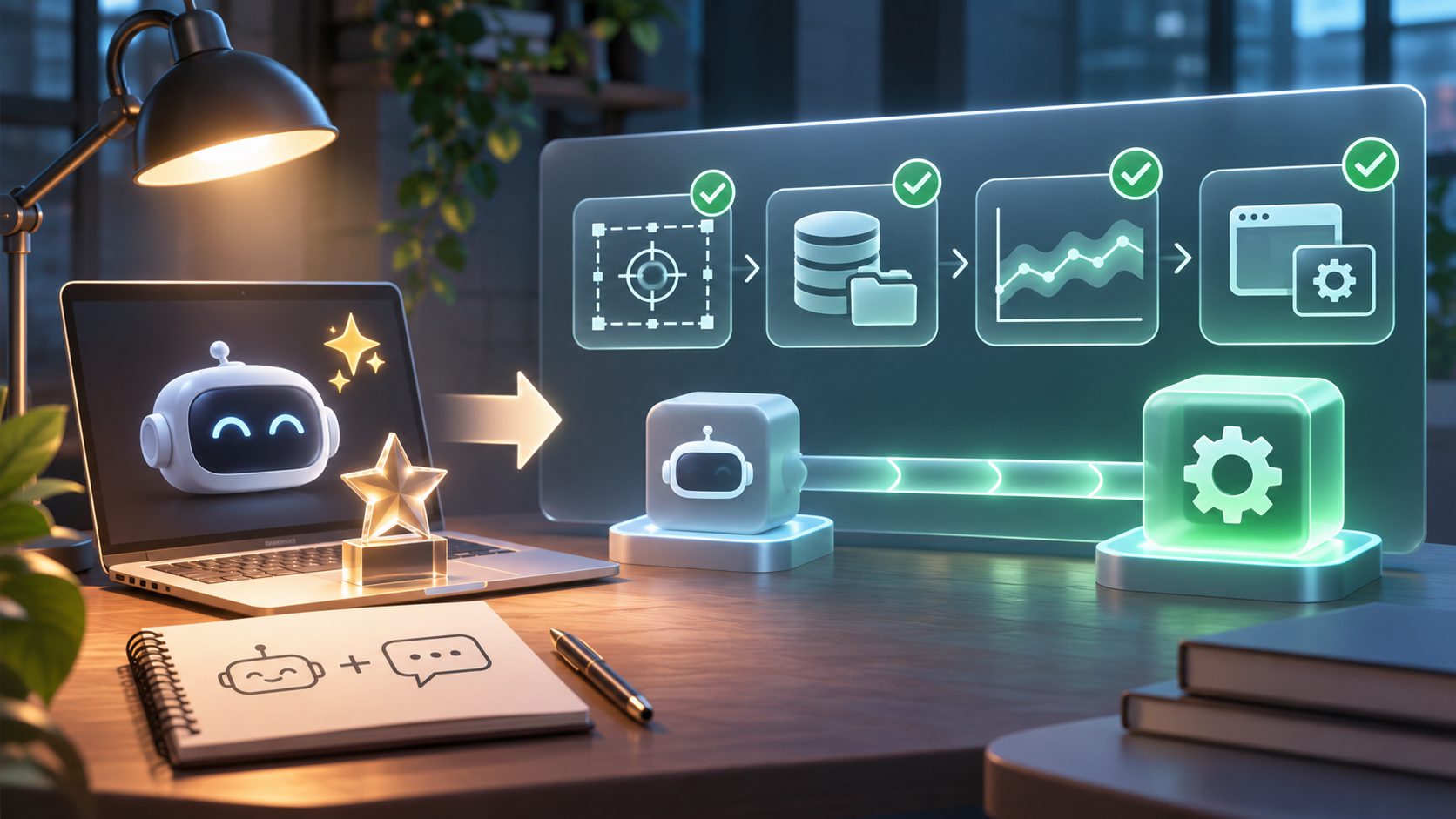
AI has a compelling characteristic: a single successful result can easily be mistaken for a production-ready technology. An agent analyzes a document correctly, generates working code, identifies an error, or creates a presentation. Suddenly, it feels as though implementation is just one step away.
In practice, this is where the difficult work begins.
Natalya Malinovskaya, Head of Testing at Colvir, completed both the technical bootcamp and the separate management course. Together with manager Maksim Poluboyartsev, she worked on an agent designed to intelligently assess the quality of test scenarios for development tasks.
The idea seems straightforward: AI analyzes code changes, compares them with the description of how a task should be tested, and helps determine whether the test scenario provides sufficient coverage.
But the team did not consider the project complete after its first successful demonstration.
Following the bootcamp, the hypothesis was incorporated into a corporate project focused on introducing AI agents into development, testing, and requirements preparation processes. A tester joined the initiative, and the team began validating the solution against different tasks, assessing its accuracy and reliability.
The solution has not yet reached production, and the team has deliberately avoided claiming economic benefits prematurely.
This is another essential lesson of the program: understanding the distinction between an idea, a training prototype, an MVP, a validated hypothesis, and a production-ready solution.
According to Natalya, AI should become a standard working tool, but employee training alone is not enough. A complete framework is required: collecting ideas, evaluating them, validating hypotheses, calculating potential benefits, obtaining information security approval, making implementation decisions, and maintaining ongoing oversight.
Without this framework, companies risk producing numerous impressive demonstrations while achieving very little actual process transformation.
Sometimes AI Accounts for Just 20% of a Solution — and That 20% Changes the Economics
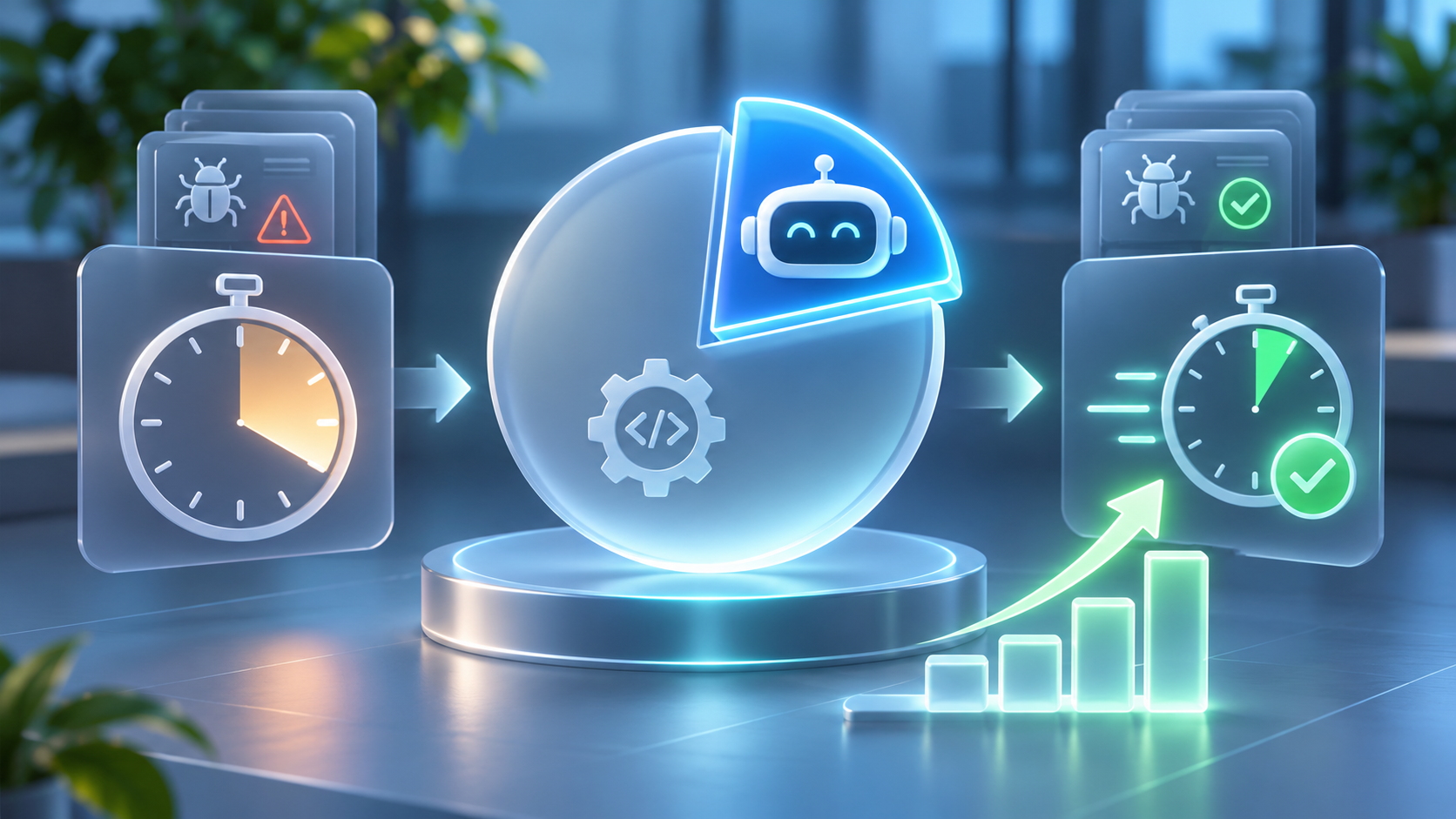
One of the pitfalls of AI transformation is trying to make AI the centerpiece of every solution.
In real-world automation, the opposite is often true. The model may represent only a small part of the overall architecture, but it is introduced precisely where conventional automation becomes too rigid or expensive.
Several such cases emerged during Colvir's demo days.
For example, one project, Colvir Revizor AI, checks end-to-end consistency across documents associated with a request: the customer's initial request, business requirements, the proposed solution, and the developer's technical specification. According to figures presented by the team during its project defense, processing time for a single request was reduced from approximately six hours to two. With hundreds of requests annually, the project's estimated economic benefit reaches around $160,000 per year.
Another project, TechDoc, addresses a common support challenge: finding answers within large volumes of technical documentation. The agent does not simply generate an answer; it must also identify the source, including the document, section, and page. According to the team's estimates, search time could be reduced from approximately 30 minutes to five, with a projected payback period of around four months.
Another graduation project focuses on commercial proposals. Gathering information from different corporate sources previously took 70–90 minutes; in the prototype, this process was reduced to 10–20 minutes.
The value does not lie in the apparent magic of generative AI. It emerges when a costly point of human effort is identified and AI is integrated precisely where it can improve the economics of the entire process.
Expensive Expertise Is Still Needed — but It Is No Longer the Only Way to Solve a Problem

At first glance, this idea may sound threatening to specialists. In practice, participants describe a somewhat different effect: AI lowers the barrier to getting started on a task.
During the training, Valery Khudoshin used new approaches to develop migration plans from Java EE to Spring and from Confluence 5 to Confluence 10, prepare departmental regulatory documentation, create code review tasks, and build a lightweight API testing framework.
Andrey Merkulov works with a different category of challenges: extracting knowledge from complex code and generating code that complies with company standards.
Anton Chernogolov, a Colvir specialist, worked with colleagues on a TrackStudio search project during the training. Today, Anton continues working with AI as part of corporate initiatives, participating in the validation of hypotheses for using agents in development, testing, and requirements preparation. He also uses AI for data analysis and test dataset generation.
This does not mean that professional expertise is becoming unnecessary. Rather, it is being redistributed. Previously, an employee wanting to test a technical hypothesis often had to find a specialist, formulate a task, wait for resources to become available, and join the development queue.
Now, employees can complete part of this journey independently: build a prototype, validate a concept, and approach a specialist not with an abstract idea, but with a working draft.
As a result, expensive expertise is no longer spent on every minor operation. It can be focused on architectural decisions, validation, and tasks where specialist knowledge is genuinely indispensable.
More People Will Be Able to Code. Accountability for Results Will Become Even More Important
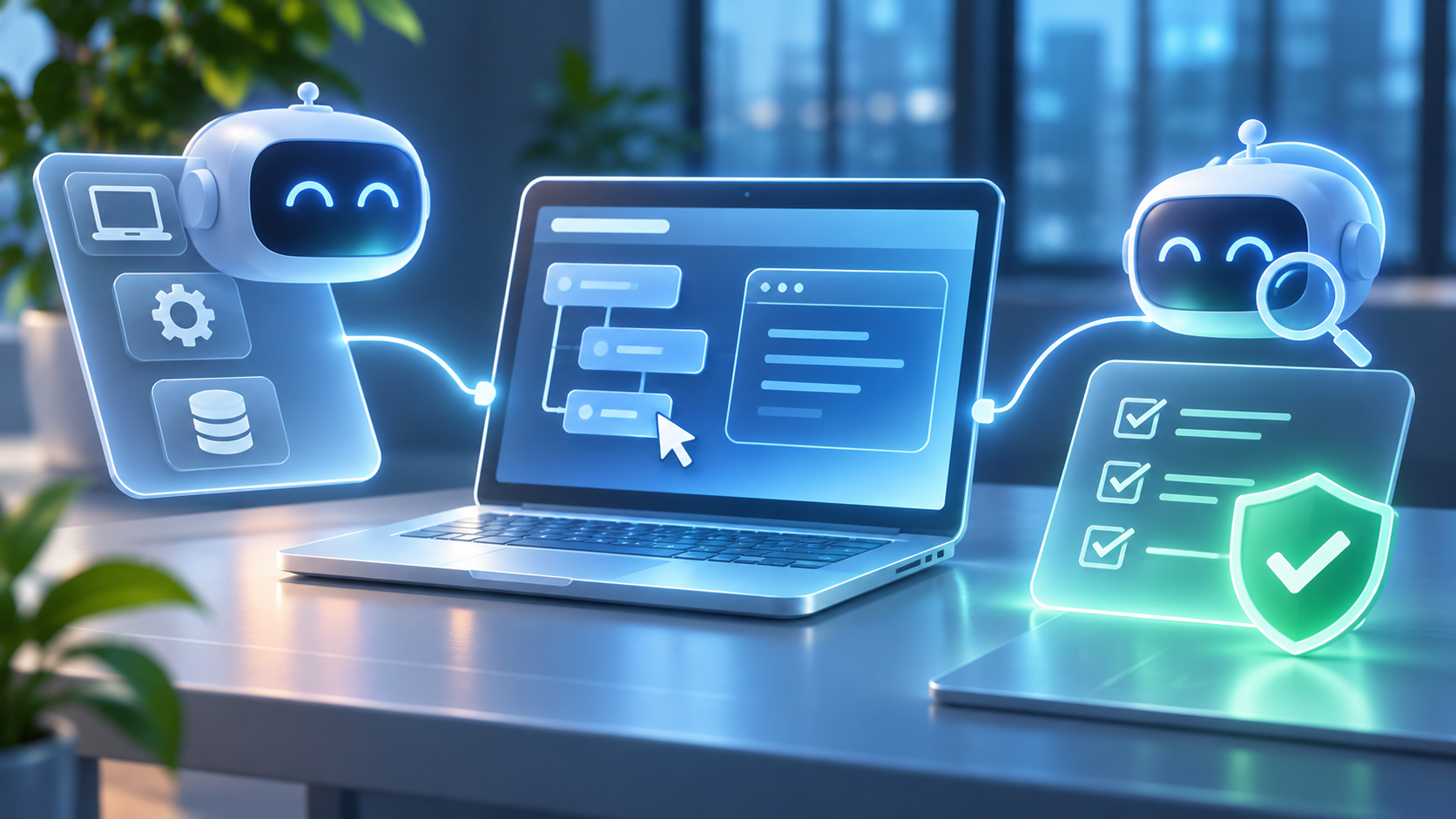
For some bootcamp participants, the training was challenging precisely because the familiar user interface quickly gave way to more technical tools.
Participants encountered the command line, where programs are controlled through text commands, file operations, application programming interfaces (APIs), the Git version control system, server configurations, and access permissions. Employees without a technical background needed more time to connect these concepts to their everyday work.
Olga Vodyan admits that some operations were initially difficult to understand, while employees with programming experience naturally found the material easier to absorb.
Maria Korchagina, Deputy Head of the HR Department at Colvir, shares a similar view: “In my opinion, the course is very intensive and not really designed for beginners.” Nevertheless, even without a separate training project, Maria achieved a practical result: an AI agent equipped with relevant knowledge is already helping her gather information needed for her work.
Yet it is precisely through overcoming these difficulties that a new competence emerges.
After completing the training, Olga began regularly using AI to prepare descriptions of development results, analyze and structure regulatory and other working documentation, and check whether solutions comply with existing user manuals. She also experimented with using available materials to generate module functionality descriptions, implementation project concepts and scope definitions, and project questionnaires. When working with documents containing confidential information, corporate data handling rules must be followed and only authorized tools may be used.
Her next step involves more complex scenarios: analyzing requirements not only against documentation but also against actual system behavior, modeling different possible outcomes, and identifying hidden gaps that could allow standard workflows to be bypassed.
Alongside these remarkable new capabilities comes a greater need for rigorous validation. The easier it becomes to create code, documents, and solutions, the more important it is to verify their origin, logic, and correctness.
Another example of practical AI application is an agent designed to monitor compliance with service level agreements. During the training, Aida Sadykova, a Colvir specialist, worked on such a solution. She continues applying the skills she acquired to validating AI hypotheses and building agents.
A separate graduation project focused on calculating the risk of SLA violations demonstrates why clearly defined boundaries are essential when using AI for critical tasks. The team deliberately decided not to delegate the calculation itself to AI. Instead, it remained deterministic — based on explicit, predefined rules — while the model was tasked with explaining the result.
For critical processes, this is one of the key principles of future architecture: use AI where it genuinely strengthens the system, without making an opaque model the sole source of decisions.
“This is a general principle of our architecture: the model writes queries, explains, or verifies, but it never becomes the sole source of a decision. Wherever possible, it does not even access the underlying data, working instead with its structure and validation results,” explains Vitaly Filon, AI Architect at Colvir.
AI Skills Are Becoming a Factor in Choosing an Employer

Corporate AI training is gradually producing another effect that is difficult to measure through return on investment.
For technical professionals, the opportunity to work with modern technologies is becoming part of the professional environment, influencing not only productivity but also employer attractiveness.
Dmitry Yanchilenko was interested in Colvir's AI initiatives even before joining the company. During the training, his team developed a prototype called DevTestQA, designed to check how accurately a “How to Test” description reflects actual changes to system objects.
For Dmitry, the most valuable outcome was learning vibe coding. For now, he primarily uses it for supporting tasks, such as generating test scripts, but his broader vision is much more ambitious: maximizing the automation of everything that does not require human intelligence.
The program also demonstrates another unexpected effect on employee engagement with AI. Training sessions take place in the evenings, some assignments require additional effort, and projects do not always work on the first attempt. Nevertheless, internal AI events attract employees who are not even formally enrolled in the course. According to Mikhail Larkin, demo day broadcasts drew significantly more viewers than the number of course participants, while department heads contacted teams during their presentations to discuss potential follow-up pilots.
AI training is beginning to evolve from a mandatory HR activity into an internal foundation for technological development.
Six Months in AI Can Mean an Entire Generation of New Tools

Mikhail Zhelyazko's experience illustrates particularly well why AI cannot be learned once and for all. He completed the first cohort but was unable to fully integrate the tools into his work at the time: learning and debugging required too much effort.
Later, Mikhail saw the results achieved by the third cohort, independently revisited the recorded sessions, and eventually joined the fourth cohort.
By then, the technology itself had changed significantly. Tasks that required considerable technical effort six months earlier had become much more accessible. Vibe coding had entered everyday practice. As an optional experiment, Mikhail built a Chrome extension to organize more than a hundred accumulated bookmarks, then began exploring how the same approach could be applied to digitizing the software enhancement process and evaluating requirements.
Sanzhar Arynbekov, Client Request Manager at Colvir, emphasizes a different point: AI tools are evolving so rapidly that mastering the fundamental principles of working with the technology is more important than learning individual tools. During the training, he worked on the “AutoCoder” project and also developed a supporting system for request managers — a dashboard with recommendations.
The pace of technological change is also confirmed by Denis Filippov, who has now observed four cohorts of the course. According to him, each new cohort introduces knowledge and approaches that significantly improve the way participants work with AI.
Anton Chernogolov notes that the latest course already differs considerably from the first. Participants now learn to create complete workspaces for AI agents, consolidate project information into a unified knowledge base, connect corporate tools, and use ready-made instructions for recurring tasks. These capabilities, which were absent from the first cohorts, are becoming the next focus of the training program.
This leads to a somewhat inconvenient conclusion for corporate education: AI cannot be taught as a static discipline.
A solid foundation is essential — context management, task decomposition, result validation, security, and solution economics. But the tools built on top of that foundation will need to be updated continuously.
The Future of Human Work Increasingly Resembles Managing a System of Agents

After completing the training, Viktor Kosinov and his team developed a chatbot for analyzing and optimizing SQL queries to an Oracle database. Beyond this project, he continued experimenting with vibe coding.
According to Mikhail Larkin, across four cohorts, teams brought several dozen prototypes to the final demonstration stage. At least three solutions have already entered the production environment.
This fundamentally changes the company's challenge. When there are only a few AI projects, each can be managed individually. But when ideas begin emerging across every department, a comprehensive pipeline becomes necessary: a secure environment, foundational training, identifying employees capable of driving AI adoption within their teams, prototype development, demo days, economic evaluation, IT audits, code reviews, assigning solution owners, and only then moving into production.
What began as an AI course has become part of the company's operational processes.
The Most Important Result Is Not Teaching Employees AI, but Teaching Them to See Their Work Differently
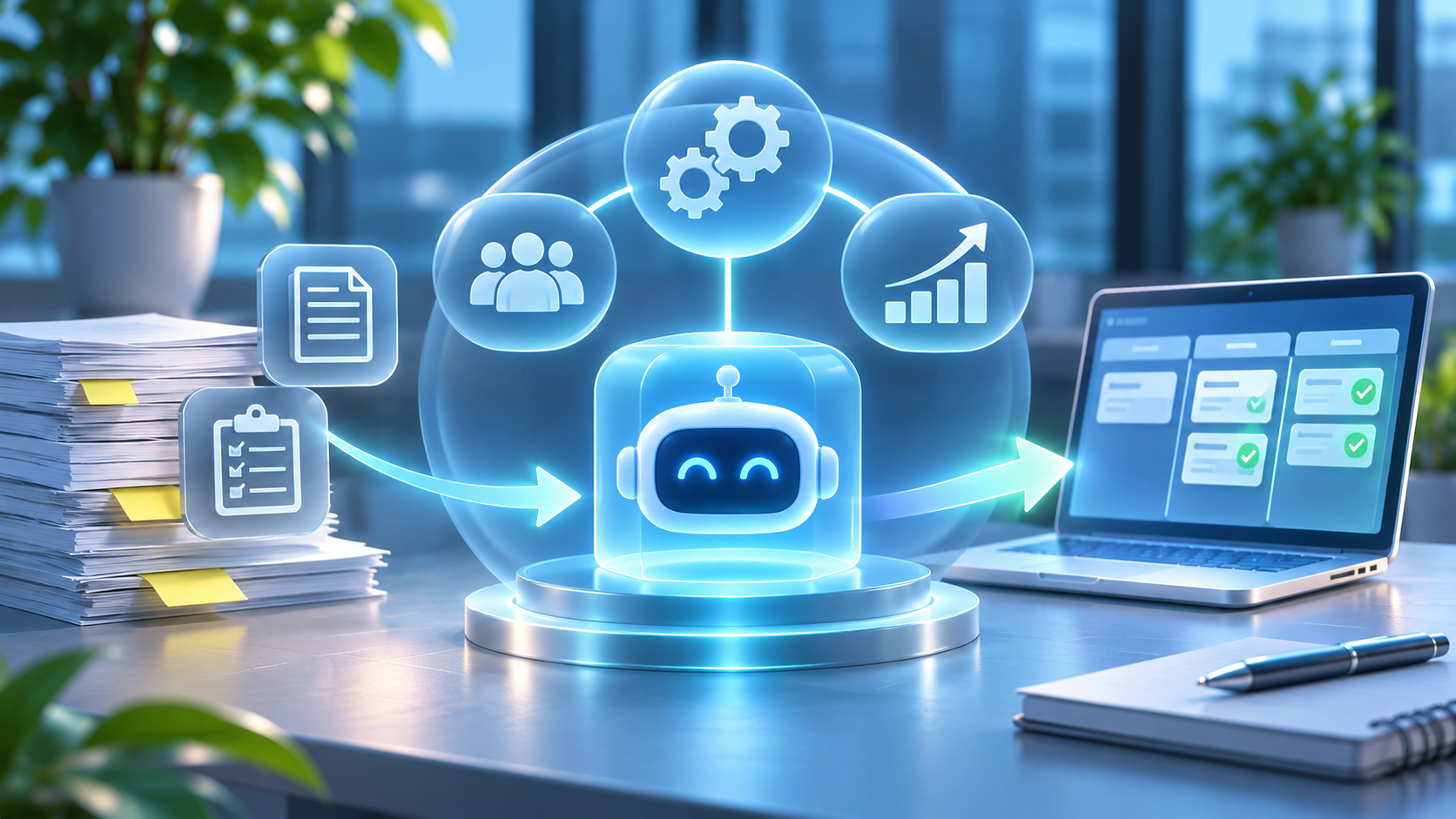
People who are just beginning to use AI tools usually start by asking, “What can AI do?” At the next level, the question becomes, “What can AI do for me?” But the most important question, which Colvir AI Camp participants gradually arrive at, is: “How should a process be designed so that part of the work can be safely delegated to AI, the results are reproducible, and people are freed up for more complex tasks?”
Answering this question requires employees to examine their own processes from a different perspective: identifying unnecessary manual operations, knowledge that exists only in one specialist's head, information that employees repeatedly search for, time-consuming approvals, opportunities for standardization, the data required for decision-making, and the points where human involvement must remain essential.
AI Camp has evolved into a much deeper experiment in transforming the company's working culture. Graduates potentially leave the program with more than just a new digital tool. They begin to act as internal AI champions: employees capable of identifying processes suitable for automation, building prototypes, assessing limitations, demonstrating business value to managers, and helping colleagues follow the same path.
According to program participants, the next stage of AI transformation will require not only more powerful tools but also new approaches to training. Olga Vodyan sees strong potential in practice-oriented courses tailored to specific departments and their everyday tasks. Anton Chernogolov proposes making foundational AI competencies accessible to all employees and expanding the exchange of ready-made solutions between teams.
Some of the necessary infrastructure is already in place at Colvir. The company has established unified rules for secure data handling and a corporate skills catalog containing ready-made instructions and workflows for AI agents. Employees can enable validated skills for working with the internal knowledge base, task-tracking system, and branded presentations with a single command, then receive updates automatically. This catalog has the potential to become a shared library of solutions that have passed post-demo validation and preparation for production deployment.
Colvir sees the next step as further developing its existing corporate AI infrastructure, expanding its multi-level training program, and systematically moving validated solutions from prototypes into production.
The experience accumulated within the company is gradually extending beyond its internal operations. One of the new formats launched in September is Colvir Academy, which brings practical AI training to employees of the company's banking clients.